
Nursing Professor Develops AI Coach To Strengthen Clinical Reasoning

Jill Ogg-Gress, DNP, APRN, FNP-C, ENP-C, was selected for the first cohort of Google’s Higher Education Faculty AI Fellowship.
(September 29, 2026) — As artificial intelligence finds its way into classrooms and health care, nurse educators face an important question: How can they design learning environments that incorporate AI while still building clinical reasoning skills?
Jill Ogg-Gress, DNP, APRN, FNP-C, ENP-C, had been thinking about that question in her work with Family Nurse Practitioner students at Georgetown University’s Berkley School of Nursing. As an associate professor and clinical education director for the program, she wanted to find ways for AI to help students build confidence and competence while still requiring them to do the cognitive work essential to patient care.
“In the clinical education of advanced practice nurses, we’re not just teaching knowledge; we’re developing confidence and competence,” Ogg-Gress said. “How do we design learning environments that leverage AI to enhance thinking without allowing it to replace it?”

Jill Ogg-Gress
That focus aligned closely with the goals of Google’s Higher Education Faculty AI Fellowship. Google selected Ogg-Gress for the program’s competitive inaugural cohort, giving her an opportunity to explore the question with faculty members from other disciplines and develop an AI-supported Clinical Reasoning Coach for nursing students.
“This fellowship is an important recognition of Jill’s leadership and her commitment to helping us think differently about how artificial intelligence is shaping nursing education, practice and research,” said Roberta Waite, EdD, RN, PMHCNS, ANEF, FADLN, FAAN, dean of the Berkley School of Nursing. “At the Berkley School of Nursing, we know that AI is not simply a technology issue. It is an opportunity for us to think deeply about how we prepare our students, support our faculty and ensure that technology is used responsibly and thoughtfully.”
Learning Across Disciplines
Members of the fellowship’s inaugural cohort worked remotely to address the opportunities and challenges AI presents in higher education before coming together in-person to work on their individual projects.
“One of the most valuable parts of the fellowship was learning how faculty from different disciplines are approaching AI through a pedagogical lens,” Ogg-Gress said. “Those conversations challenged me to think beyond the initial Clinical Reasoning Coach and consider how AI could support different learners, provide meaningful feedback, and be evaluated for its impact on student learning.”
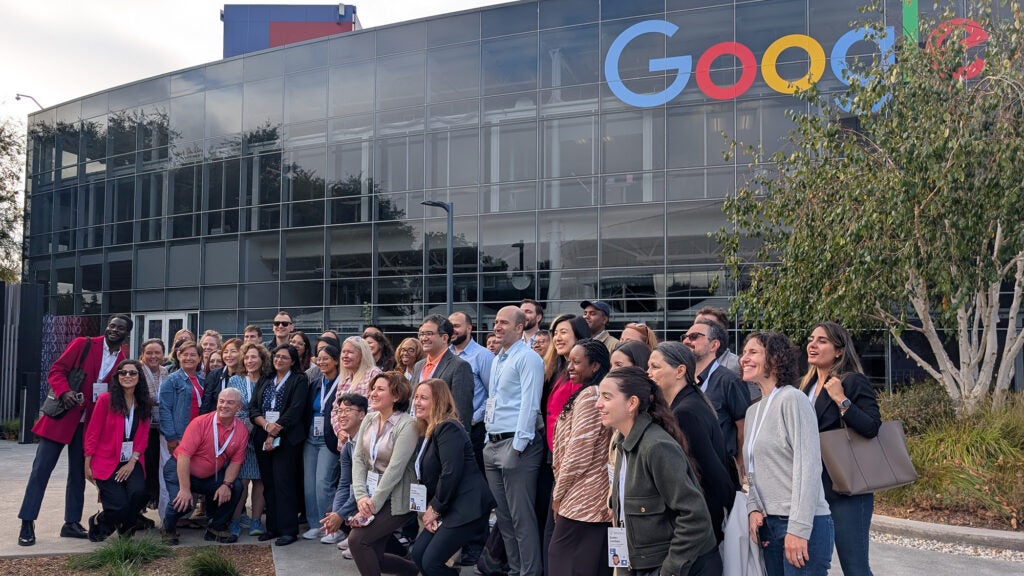
Being able to come together to work with faculty from other disciplines was one of the most valuable parts of the fellowship for Ogg-Gress.
Building a Clinical Reasoning Coach
The Clinical Reasoning Coach Ogg-Gress developed during the fellowship is an AI-supported learning tool created with a customized version of Google’s Gemini. The tool gives Family Nurse Practitioner students additional opportunities to apply their knowledge and strengthen their confidence, patient interviewing, clinical reasoning and medical decision-making skills in a low-stakes environment.
Through individualized prompts that respond to students’ decisions and reasoning, the tool coaches them through the clinical encounter and supports them as they synthesize patient information to formulate an appropriate assessment and plan.
“For example, a student might have a sample case where an older adult comes to a clinic after a fall with dizziness,” Ogg-Gress said. “The student must interview the patient, identify relevant history, recognize important clinical cues, develop a differential diagnosis and determine what additional information is needed to safely evaluate the patient.”
The Clinical Reasoning Coach is designed to guide students rather than give them the answer. If a student asks an incomplete question, overlooks an important piece of information or reaches a conclusion that is not adequately supported by the case, the coach responds with targeted prompts that encourage the student to reconsider their reasoning.
“It might ask what additional history would help distinguish among possible causes of dizziness, what findings increase or decrease concern for a particular diagnosis or what information is still needed before reaching an assessment and plan,” Ogg-Gress said. “This creates a low-stakes environment where students can practice thinking through a patient encounter, recognize gaps in their reasoning and try again.”
That opportunity for reflection and repeated practice is central to the tool’s purpose.
“A low-stakes environment gives students the freedom to work through their clinical reasoning, recognize where they may have missed an important cue and try a different approach,” Ogg-Gress said. “That process of reflection and repeated practice is how we help students build confidence and progress toward clinical competence.”
Supporting Different Learners
Students enter clinical education with different experiences and learning needs. The coach adapts its prompts based on each student’s responses and reasoning, providing individualized opportunities for deliberate practice between classroom, simulation and clinical experiences.
Ogg-Gress wanted to explore how AI could create individualized opportunities for students to apply their knowledge, strengthen clinical reasoning and medical decision-making, and build confidence while reinforcing that technology should support, not replace, clinical judgment.
The educational approach is grounded in national nursing and nurse practitioner competency frameworks, including those developed by the American Association of Colleges of Nursing and the National Organization of Nurse Practitioner Faculties. This helps ensure that the use of AI supports the clinical judgment, decision-making and professional competencies students are expected to develop throughout their education.
Ogg-Gress’ work builds on her broader efforts to explore how emerging technologies can support diagnostic reasoning, clinical decision-making and reflective practice in nurse practitioner education.
Ensuring That AI Strengthens Thinking
Integrating AI into clinical education requires careful consideration. Although these tools can create richer and more individualized opportunities for learning and practice, they should strengthen students’ thinking rather than replace it. The goal is to use AI to prompt students to reason, reflect and make clinical decisions — not to provide the reasoning for them.
“The coach is intentionally designed so that students still have to do the cognitive work,” Ogg-Gress said. “Rather than providing an answer, it uses questions and targeted prompts that require students to explain their thinking, identify relevant clinical information and reconsider their reasoning when needed. That is what makes it a learning experience rather than a shortcut.”
“Ultimately, this is about preparing clinicians to make thoughtful, well-supported decisions for patients,” Ogg-Gress said. “Technology can enhance their preparation, but it cannot replace the judgment, accountability and human connection that excellent nursing care requires.”
Ogg-Gress said Georgetown has provided an environment in which she can explore those questions while remaining focused on the responsibilities clinicians have to their patients and communities.
“I am grateful to be part of an institution like Georgetown that encourages faculty to thoughtfully explore how emerging technologies can enhance teaching and learning while remaining grounded in our responsibility to students and the patients and communities they will serve,” she said.
Moving From Innovation to Evaluation
With the fellowship concluded and the Clinical Reasoning Coach already piloted with Family Nurse Practitioner students, Ogg-Gress is now focused on evaluating the pilot and considering how the findings might inform future refinements to the tool.
“I am particularly interested in examining student confidence, clinical reasoning and perceived preparedness, as well as how students engage with the coach and whether repeated practice supports their progression toward clinical competence over time,” she said.
For Ogg-Gress, the work reflects a larger goal: ensuring that innovation in graduate nursing education ultimately strengthens students’ ability to think critically, exercise sound clinical judgment and provide thoughtful, patient-centered care.