
Women’s Health Alumna Expands Access to Care in Underserved Texas Communities
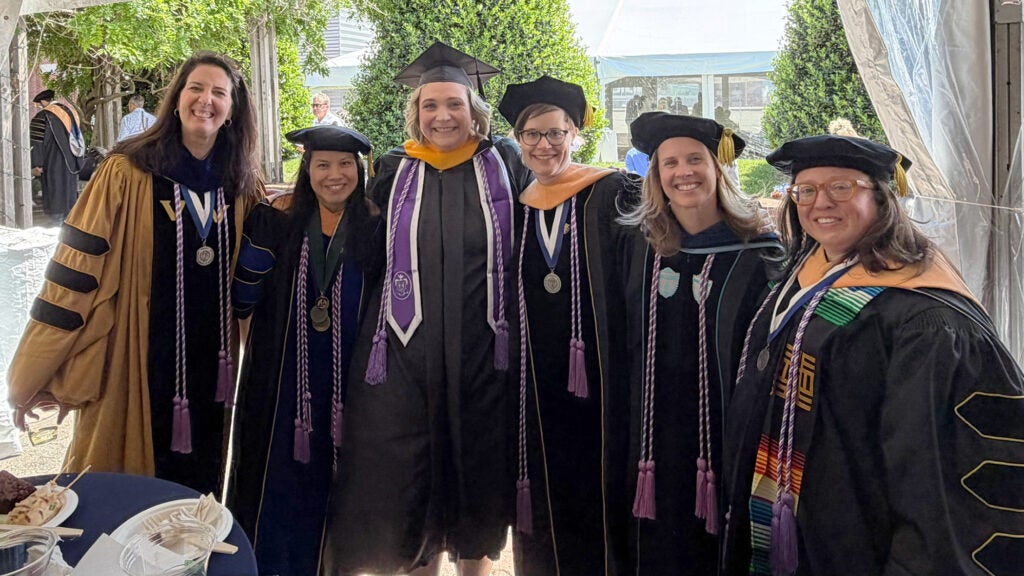
Rebecca “Becca” Levy (G’26), MS, APRN, WHNP-BC, pictured third from left, with Berkeley School of Nursing faculty at her graduation.
(July 10, 2026) — For Rebecca “Becca” Levy (G’26), MS, APRN, WHNP-BC, becoming a women’s health nurse practitioner was anything but a straight path. After pursuing a career in legal studies, Levy entered nursing school at age 30 during the COVID-19 pandemic. Today, she provides reproductive and gynecologic care at a federally qualified health center (FQHC) in Houston, where she works to reduce barriers to care for predominantly Hispanic and low-income patients.
During her clinical training, she witnessed how immigration concerns, economic instability and limited access to transportation affected patients’ willingness and ability to seek care. “People have enough things to worry about,” she said. “I take very seriously the responsibility of providing care in underserved communities.”
“Most of my patients are Spanish-speaking,” said Levy. “I’m still learning medical Spanish, but I’ve learned that communication is about much more than language. It’s about making sure people understand what’s happening with their health and what their options are.”
Finding Her Way to Nursing
Levy grew up in West Texas, primarily in El Paso, where she was immersed in a predominantly Hispanic community and culture. “We weren’t wealthy people,” she recalled. “Any schooling I pursued, I had to figure it out myself.”
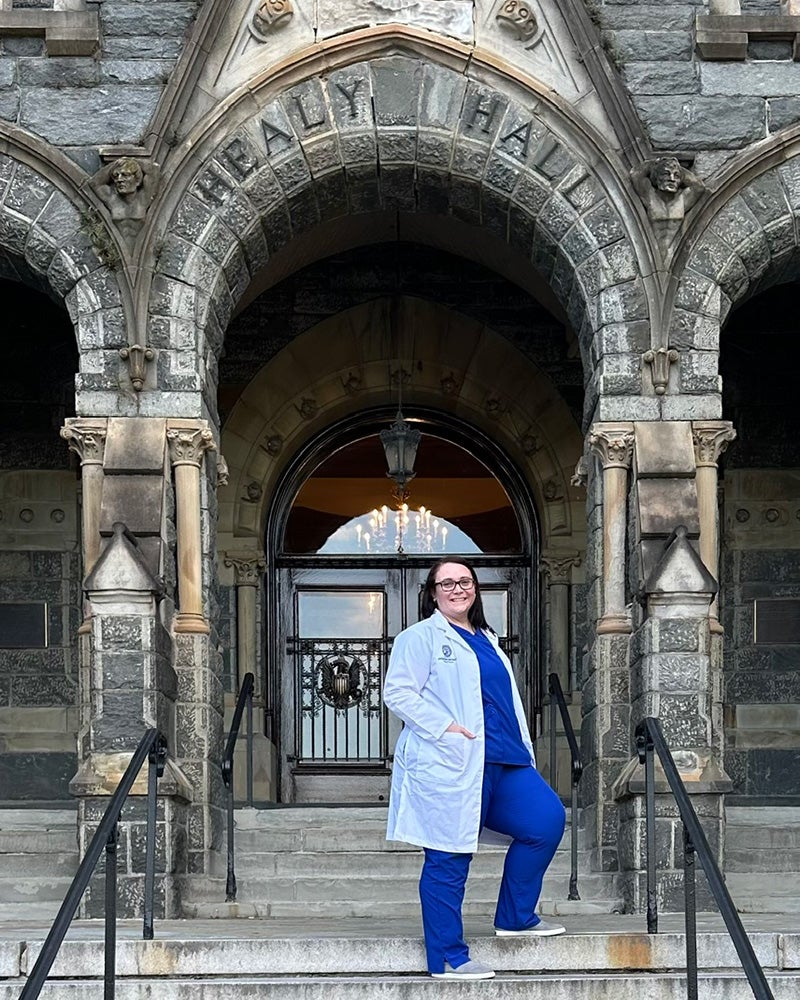
Levy on the steps of Healy Hall during an on-campus intensive session for the WHNP Program.
Her educational journey included several detours. After high school, Levy struggled academically, later learning that untreated attention-deficit/hyperactivity disorder (ADHD) had contributed to those challenges. “I flunked out of three community colleges right out of high school,” she said. “I didn’t really have a path at the time.”
Despite the setbacks, Levy earned a paralegal degree and worked for several years before deciding to pursue nursing. “Nursing was much more accessible than medical school,” Levy said. “I could earn an associate degree while working, and it felt like the fastest way to get into healthcare, but it was probably the worst time to start a nursing career,” said Levy, referring to starting her nursing career in December 2020 during the height of the COVID-19 pandemic.
Unable to secure a position in women’s health as a new nursing graduate, Levy accepted a role caring for COVID-19 patients in a step-down intensive care unit. “My first year of nursing was COVID nursing,” Levy said. “I cried every day. Sometimes because I was overwhelmed, sometimes because I was learning hard things and facing situations I’d never imagined.”
Despite the challenges, Levy remained committed to her long-term goal of becoming a provider in women’s health.
“I knew I wanted to be a nurse practitioner,” she said. “I enjoyed the role nurses had with patients. We were the ones spending time with them, providing education, answering questions and helping them navigate what was happening. That relationship-building was what I loved.”
A Georgetown Opportunity
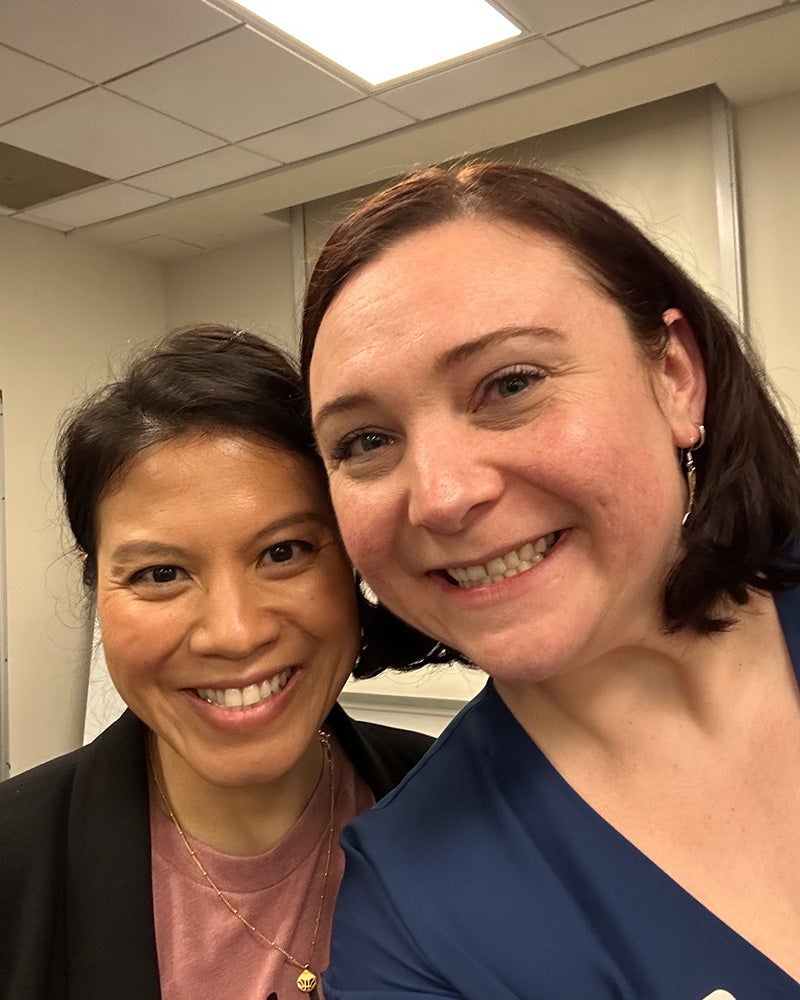
Levy with Kwuan Paruchabutr, DNP, FNP, WHNP, CNM, FNAP, FAAN,FAANP, assistant professor of nursing
When Levy began researching graduate programs, she found relatively few women’s health nurse practitioner programs that offered distance-learning options.
She applied to the Berkley School of Nursing at Georgetown almost on a whim. “I was very honest in my personal statement,” Levy said. “I had to submit every transcript, the good and the bad, and explain what had happened.”
While working a hospital shift, she received the call informing her that she had been admitted to the Women’s Health Nurse Practitioner program. “I was standing on the floor at work when I found out,” she recalled. “I was so shocked and excited.”
Levy credits the Georgetown nursing faculty and learning environment with helping her succeed as a student who had once doubted her academic abilities. “I pretty much assumed that at a big school, professors wouldn’t know who you were,” she said. “Instead, everyone knew my name, knew what I was going through, and genuinely cared about whether I succeeded.”
She particularly valued the program’s emphasis on addressing healthcare inequities. “I care so much about culturally congruent care, trauma-informed care, and eliminating weight bias in healthcare,” Levy said. “To learn from faculty who are doing research on these topics and writing the books on them was beyond amazing.”
Levy also points to Georgetown faculty mentors who helped shape her confidence as a clinician. “They were incredibly supportive,” she said. “Even now, there are faculty members I still reach out to for advice about jobs.”
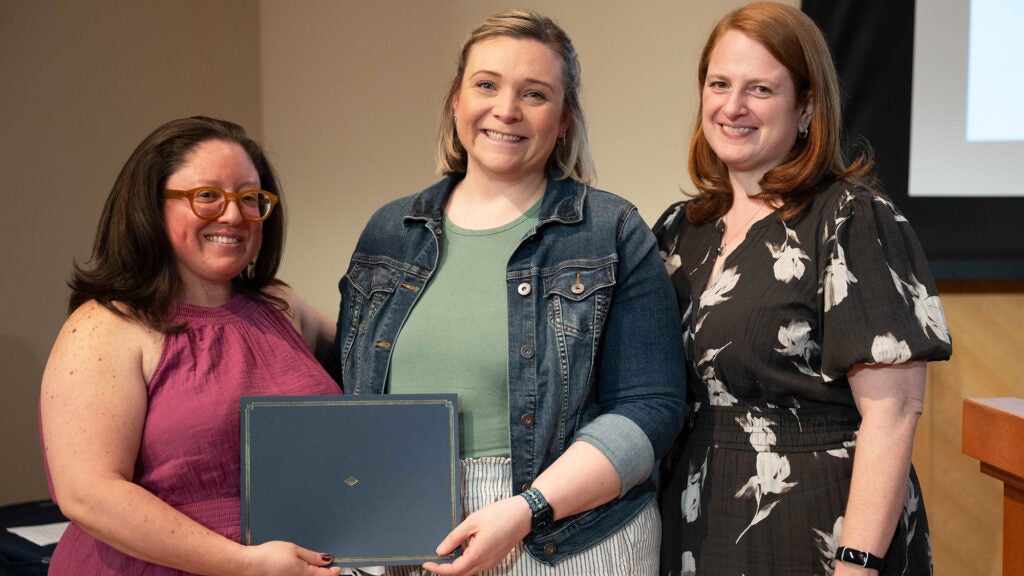
Levy received the WHNP Student Leadership Award at the Blessing of the Hands ceremony during the 2026 Commencement Weekend. She is pictured here with (at left) Melicia Escobar, DNP, CNM, WHNP-BC, FACNM, associate professor and program director for the Nurse-Midwifery/WHNP and WHNP programs, and (at right) Ella Heitzler, PhD, WHNP, FNP, RNC-OB, FNPWH, associate professor of nursing.
Providing Women’s Health Across Texas
Securing clinical placements proved challenging in Texas, where many health systems reserve training opportunities for students enrolled in affiliated university programs.
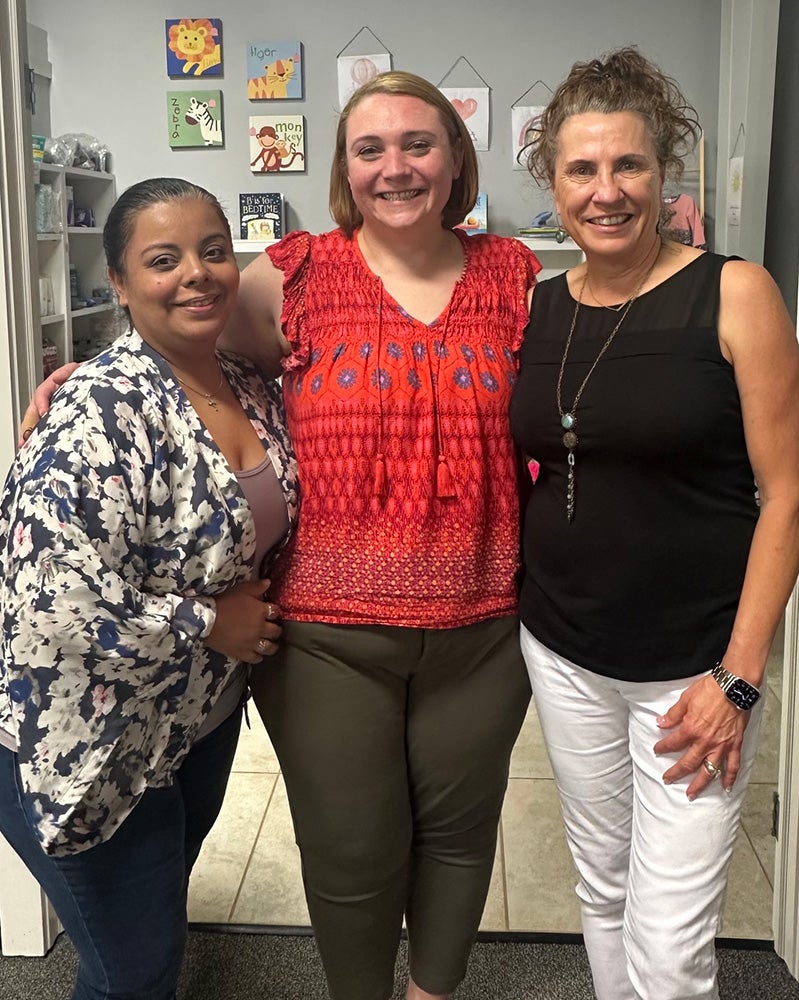
Levy (center) with her preceptor and the interpreter/resource specialist at one of her clinical placements.
To complete her clinical hours, Levy drove thousands of miles across the state. “I drove four hours one way to Fredericksburg for clinicals,” she said. “I drove five hours to the Rio Grande Valley. I was all over Texas.”
One of her most influential preceptors was a certified nurse-midwife serving rural communities throughout the Texas Hill Country. In some locations, the midwife rented space inside community organizations to provide prenatal and gynecologic care. In another, she operated out of a converted room inside a funeral home.
“I’m from the city, so it was eye-opening,” Levy said. “We’d see postpartum patients, do Pap smears, provide prenatal care, whatever women needed.
“People would find a way to get care because they trusted her,” she added. “She had delivered generations of babies in some of these communities.”
The experience exposed Levy to the realities of healthcare access in rural communities. “I remember seeing one patient for her two-week postpartum appointment,” Levy said. “She arrived with her baby wrapped against her, ready to head back to a physically demanding job as soon as the appointment was over.”
The clinical experience also deepened Levy’s understanding of the cultural and practical factors that influence healthcare decisions. “One thing I learned is that if you explain why something is important, people will find a way to make it happen,” she said. “But you have to take the time to explain it.”
Meeting Patients Where They Are
Today, Levy works in a healthcare system that brings together women’s health, family medicine, behavioral health, pediatrics, dentistry and specialty referrals under one umbrella.
“When I saw the job listing, I thought it was so cool,” Levy said. “I had trained in a lot of low-resource settings, where providers were doing incredible work with very little. Here, we have resources that can really help people.”
Still, many barriers remain. “Cost is a challenge. Transportation is a challenge. Childcare is a challenge,” Levy said. “A lot of patients are already dealing with so much before they even walk through the door.”
Levy sees it as her responsibility to help patients navigate those obstacles. “I can’t expect someone to commit to a treatment plan if I don’t do my best to make it feasible for them,” she said. “My job is to explain what needs to be done and why, and then help find the easiest and most affordable way for them to do it.”
That often means searching for discount medication programs, printing coupons, identifying lower-cost pharmacies, or coordinating care across multiple providers. “I’ll spend extra time looking up prices or finding a pharmacy where a prescription costs $13 instead of $30,” she said. “For many patients, that difference matters.”
As she begins her career as a women’s health nurse practitioner, Levy remains committed to expanding access, building trust, and helping patients navigate a healthcare system that can often feel overwhelming.
“I almost would rather burn out fighting for my patients than stop caring,” she said. “At the end of the day, my goal is simple: meet people where they are and help them get the care they deserve.”
Heather Wilpone-Welborn
GUMC Communications