
School of Nursing Graduate Student Evaluates Novel Motorbike Ambulance Service To Improve Maternal Health in Rural Kenya
(February 20, 2026) — When Alexandra (“Alex”) Jones (G’26), BSN, RN, a BSN-DNP and Family Nurse Practitioner (FNP) graduate student in Georgetown’s Berkley School of Nursing, traveled to rural Kenya this January, she brought a commitment to maternal health equity. She also brought the research skills necessary to evaluate a program aimed at addressing gaps in care for pregnant and postpartum mothers.
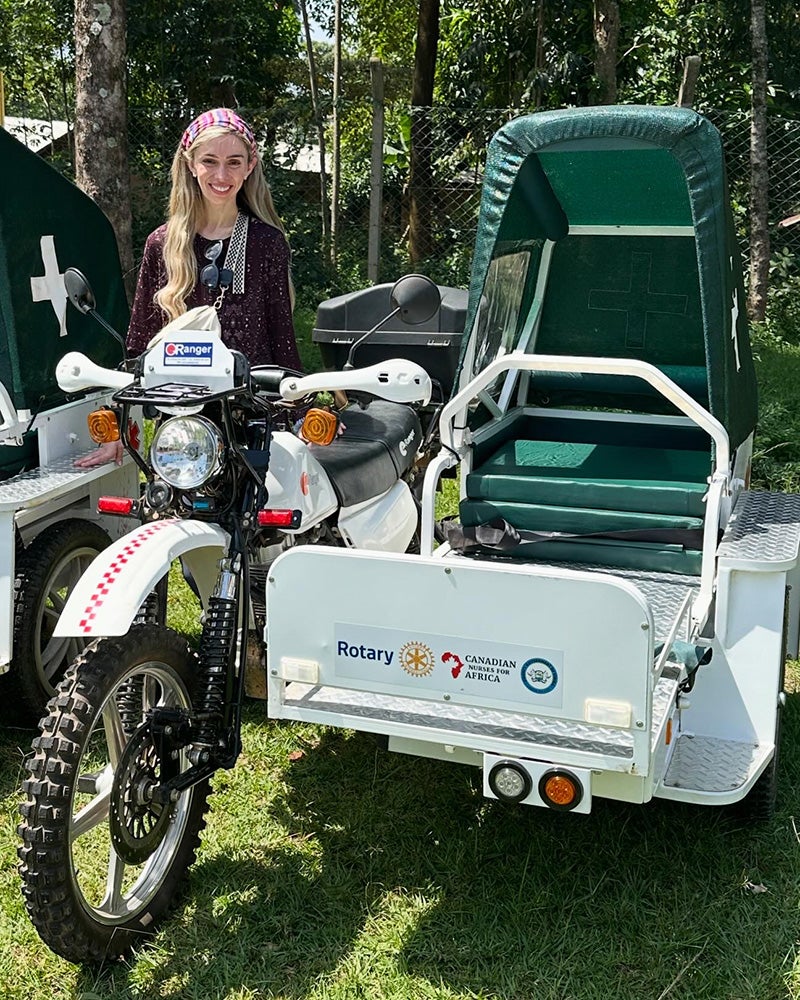
Alexandra (“Alex”) Jones (G’26), BSN, RN, with one of the motorbike ambulances that was the focus of her research in Kenya
Jones partnered with Canadian Nurses for Africa (CNFA) and the Kenyan Ministry of Health to conduct a formal survey as part of her doctoral research of a new fleet of “motorbike ambulances” designed to help women physically reach the care they need by providing on-call transportation across considerable rural distances. Debra Kosko, DNP, MN, FNP-BC, FAANP, FAAN, associate professor in the School of Nursing, mentored Jones throughout her research project. The project also received support from Georgetown’s gui2de group, which provided a member in the field with Jones to assist with data collection.
“Most women deliver at home in this area, where there is a high maternal and newborn mortality rate,” said Jones. “The goal of the program is to increase access to care for pregnancy complications, especially involving delivery, so that care for things like postpartum hemorrhaging or newborn resuscitation can be addressed in a clinical setting.”
Bridging the Gap with Motorbike Ambulances
Pregnant people in rural Kenya who want to give birth in a clinical setting may struggle to find transportation. “If women want to deliver in a health facility in the area, they have to walk or find their own motorbike, which can be time-consuming because there aren’t a lot of these vehicles in the area,” Jones said.
The new motorbikes come equipped with sidecar stretchers, and the service is strictly reserved for high-risk populations including pregnant and postpartum women as well as children under 5. In order to request a motorbike ambulance, a person would reach out to the local Community Health Provider (CHP), who would then have a motorbike dispatched with a CHP. The CHPs and motorbike ambulance drivers are both trained to handle emergencies.
“My job was to evaluate how well the ambulances were working in the area, to see if people were using them, and if not, what were the barriers preventing them from doing so,” said Jones.

(From r) Jones with the gui2de staff member who assisted with her field research and Berkley School of Nursing mentor Debra Kosko, DNP, MN, FNP-BC, FAANP, FAAN
Overcoming Geographic and Socio-Cultural Barriers
While at the Kegondi and Gividumbili Kenyan health facilities, Jones surveyed 15 users of the motorbike ambulance service, including mothers who had successfully utilized the transportation to deliver in a clinical setting. Additionally, 65 CHPs who helped dispatch or drive people to health facilities and four drivers completed surveys.
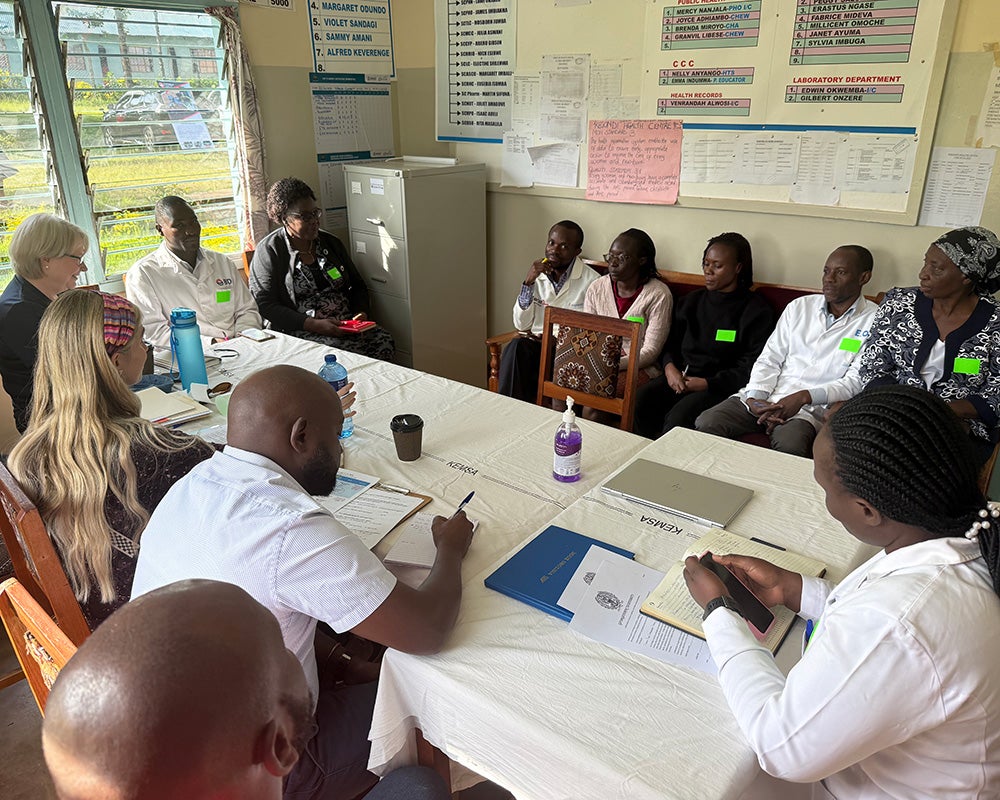
Jones surveyed stakeholders in the motorbike ambulance service, including CHPs and drivers as well as users of the service.
Jones crafted the survey to match the needs of the local population, such as having questions read at the community’s average reading level and using local translators when administering the survey.
“The most rewarding aspect was seeing the tangible results of this intervention,” said Jones. “Meeting mothers who credit the motorbike transport with the safe delivery of their children brought the data to life. The community is not only welcoming of the resource, but is actively advocating for its expansion.”
Jones’ research also delved into the socio-cultural barriers to using the motorbike ambulances through an informal group discussion with 53 people who did not use the service. Through this qualitative group discussion, she identified misconceptions that prevented women from seeking help.
“Data collection revealed that fear and lack of information were significant hurdles,” Jones explained. “Women were concerned about costs or whether a spouse could accompany them. By engaging with ‘non-users,’ we were able to identify exactly where public health education needs to step in.”
Data-Driven Insights
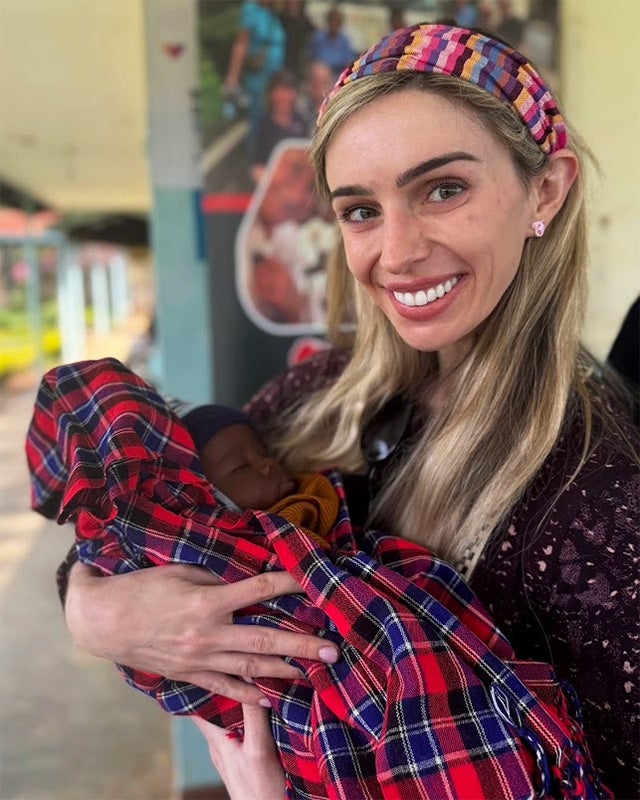
“Meeting mothers who credit the motorbike transport with the safe delivery of their children brought the data to life,” said Jones.
As Jones enters the final stages of her DNP program, she is synthesizing her findings to provide recommendations about the motorbike ambulance service for both the Kenyan Ministry of Health and CNFA. Her analysis will help determine how to scale the program to other underserved regions.
“The ultimate goal is to provide the evidence necessary to sustain and expand the motorbike fleet, and by doing so, contribute to the reduction of maternal and neonatal mortality rates,” said Jones. In addition to her DNP project defense this spring, Jones will present her research at an international health conference this year.
Taking a step back, the fieldwork for Jones served as a stark reminder of the global disparities in medical infrastructure. In regions where health centers often lack basic diagnostic tools like ultrasounds, the barrier to care is frequently physical distance.
“In the villages I visited, a medical emergency often requires traveling hours to a hospital, a journey that is both logistically difficult and financially prohibitive for many families,” said Jones. “The experience reinforced the profound luxury of health care accessibility for most in the U.S.”
Heather Wilpone-Welborn
GUMC Communications